
Roller count job scaling
A double door with ten rollers is a different job than a single door with six. What we can tell you is what drives the range. Steel rollers are cheaper parts but louder and harder on the track over time.
Port Orchard, WA
Worn or broken rollers on a Port Orchard garage door usually trace back to the 1962-1997 housing stock and damp Puget Sound winters. Here's what drives the wear and what we stock.
Pricing
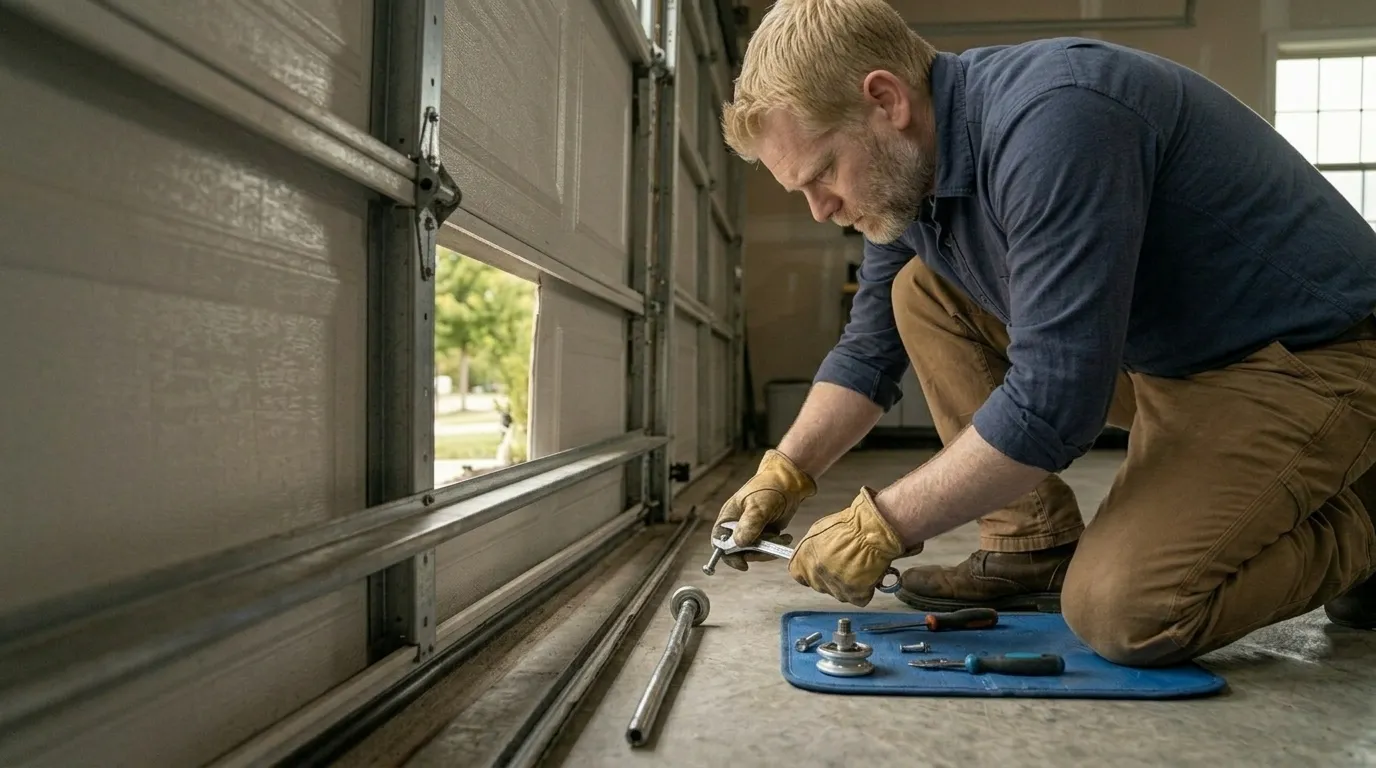
We're not going to throw a number at you that doesn't hold up once we're standing in your garage. Roller replacement pricing depends on a few things we have to see in person: whether you've got steel or nylon rollers, whether the whole set needs swapping or just the two or three that took the abuse, and whether a bent track came along for the ride.
A double door with ten rollers is a different job than a single door with six. What we can tell you is what drives the range. Steel rollers are cheaper parts but louder and harder on the track over time.
Nylon rollers with sealed bearings cost more up front and are what we recommend for most of the houses we work on here, given how often these doors cycle through damp mornings. If a spring or cable is also compromised - which happens more than you'd think once rollers start binding - that adds to the job, and we'll tell you before we touch anything.
One honest limit: if your track is bent badly enough that rollers keep jumping the rail, replacing rollers alone won't fix it. We'll say so rather than sell you parts that won't solve the problem.
Local causes
Most of the housing across this service area went up between 1962 and 1997, with the median build year sitting around 1984, and that stretch across the 20 named communities we cover means a lot of doors are running original or first-replacement hardware from that era. Rollers from that period are often steel, sometimes still on the original stem, and they've had three or four decades of cycles to wear the bore out of round.
The climate band here is mild with occasional freeze, not the deep-freeze cycling you'd get further inland, but the moisture that comes with it matters more than the cold. Steady damp air keeps the felt weatherseal and track wet more days than not, and steel rollers without sealed bearings pick up grit in that film and grind themselves down from the inside. You don't get a dramatic snap most of the time - you get a slow, gritty roll that turns into a door that shudders every time it opens.
Houses on the older end of that 1962-1997 build range are the ones we see rollers fail on first, simply because the hardware has had the most years to wear.
Warning signs
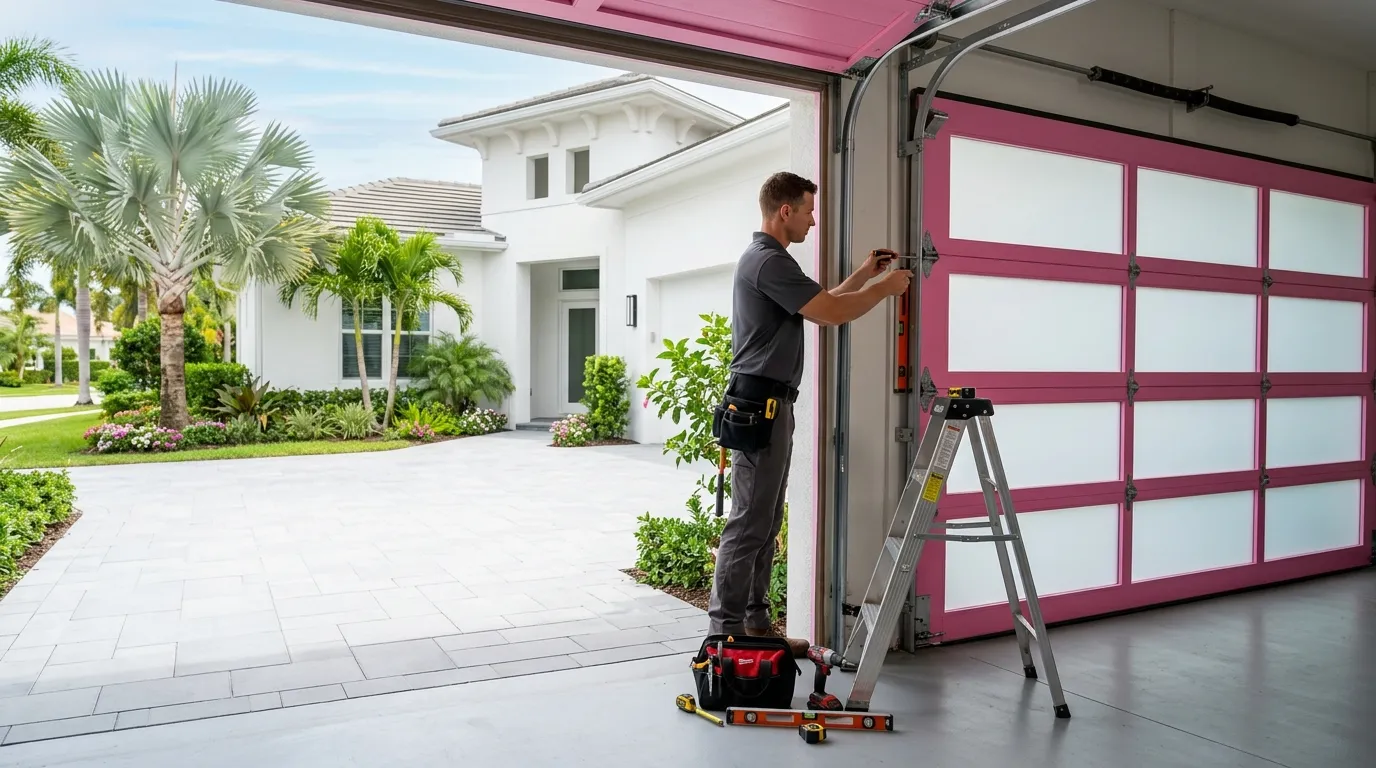
A roller going bad rarely announces itself. It starts as a rhythmic thump or squeak as the door travels, usually worse on one side than the other.
That's the roller's wheel wearing flat on one edge, no longer sitting square in the track. If you're seeing the door hesitate or jerk at the same spot every time, that's often a roller that's worn enough to catch at a track seam or a joint in the rail.
Left alone, it keeps grinding a groove into the track itself, which turns a $20 part into a track replacement. A grinding or scraping sound, versus a squeak, usually means the roller bearing is gone and it's now metal on metal against the rail. That one tends to move fast - days to weeks, not months - because there's nothing left cushioning the contact.
If a roller has actually come off the track, don't force the door. Rollers that jump the rail usually mean either a bent track or a roller stem that's sheared, and running the opener against that can bend things further or pull the door off its hinges entirely.
On the truck
We carry both steel and nylon rollers on the truck in the stem lengths and wheel diameters common to the hardware installed across this area's 1962-1997 housing stock, so a straight roller swap is usually a same-visit job, not a return trip.
Sealed-bearing nylon rollers are what we install by default now, since they hold up better against the moisture that's part of living anywhere in this mild, occasionally-freezing climate band.
We also carry the roller stems, brackets, and short sections of track that come along with a roller job often enough that we don't want to be caught without them - a bent bracket or a chewed-up track section is common once a bad roller has been grinding for a while.
What we don't stock on the truck: full track rebuilds for wider commercial-style doors, and rollers sized for hardware outside what's typical in this area's housing. If your door turns out to need something unusual, we'll tell you and get it ordered rather than guess.
Questions
Most single doors run 8 to 10 rollers along the two tracks, and doubles can run more depending on panel count. You don't always need to replace all of them - we check wear roller by roller and only swap what's actually failing, unless the whole set is the same age and showing the same wear.
Yes, if the rest are in decent shape. Rollers wear at different rates depending on which side of the door takes more stress, so it's common to replace two or three rather than the full run. We'll show you the worn ones before we recommend replacing more than that.
For the damp, mild-with-occasional-freeze climate here, sealed-bearing nylon rollers hold up better over time than plain steel. Steel is cheaper and still works fine, but it's noisier and wears faster once moisture gets into the bearing, which is a near-constant condition in this area.
Usage cycles matter, but so does hardware age. If your house is on the older end of the area's 1962-1997 typical build range and still has original rollers, decades of cycles on unsealed steel bearings will wear out faster than a door with newer sealed rollers, even on an identical house next door.
Explore more
Ready when you are
Port Orchard Garage Door Pros repairs and installs garage doors, springs and openers in Port Orchard, WA and the surrounding area.