
Normandy Park, Port Orchard WA
Garage Door Service for Normandy Park Homes
Normandy Park homes date to around 1962, older than most of the service area. We travel from Port Orchard to fix the original hardware still common on these doors.

Local detail
This Area's Housing
Normandy Park sits about 15 miles from our Port Orchard shop, and the houses out here skew older than most of the territory we cover. The median build year here runs around 1962, a good two decades ahead of the 1984 median for the wider service area. That's not a small gap. A door installed in the early 1960s was built for a different set of expectations than one from the 1980s boom - different spring counts, different mounting styles, different steel gauges.
With roughly 2,616 households in this pocket and a median income near $144,821, a fair number of these original garage systems have been swapped out over the years for newer openers bolted onto old track. That mismatch is common and it's one of the more frequent reasons a door starts binding or reversing for no obvious reason. The bones of the house are older than the equipment hanging on them, and the two don't always agree.
We're not guessing about the era - it shows up in the hardware every time we're out this way. Extension springs mounted flush against the track with no containment cable are a giveaway of that early-60s build, and they're a safety item worth flagging even if the door still runs fine.
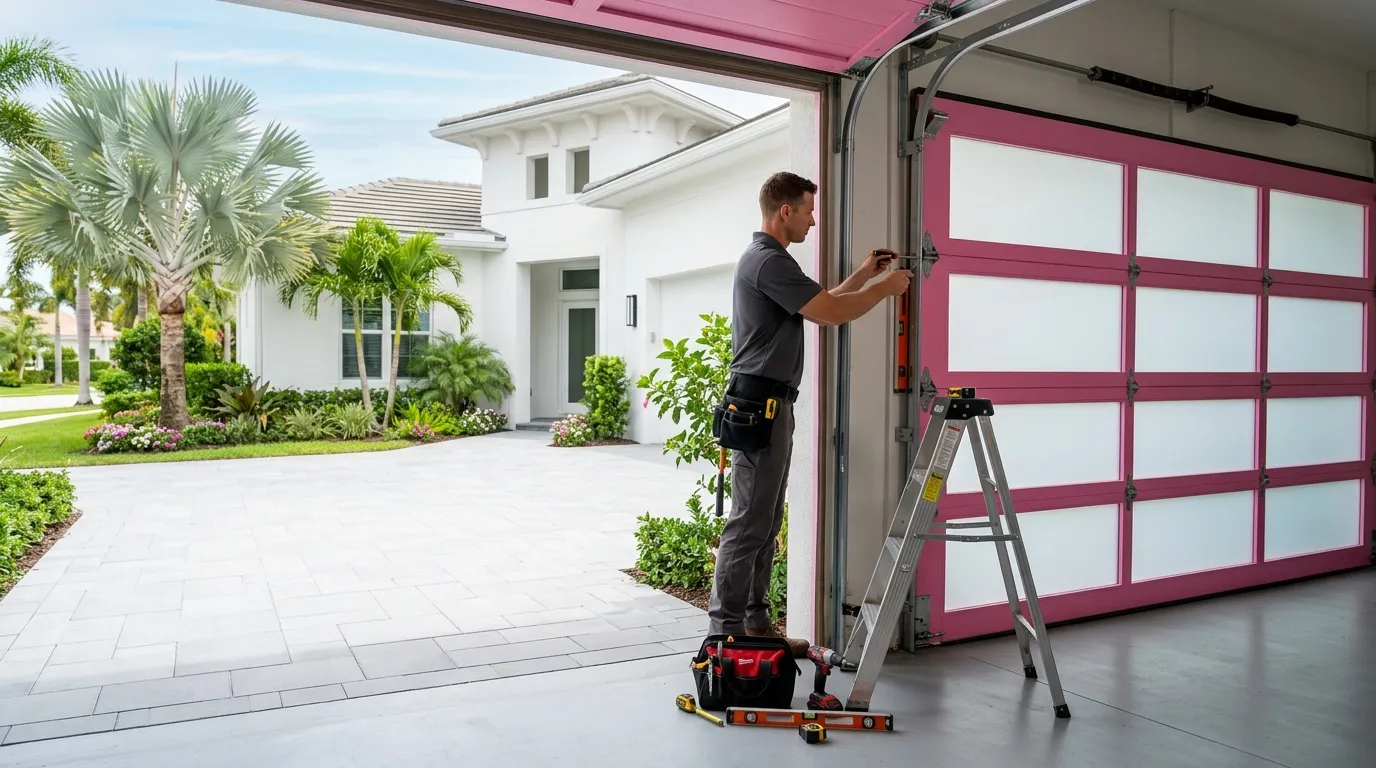
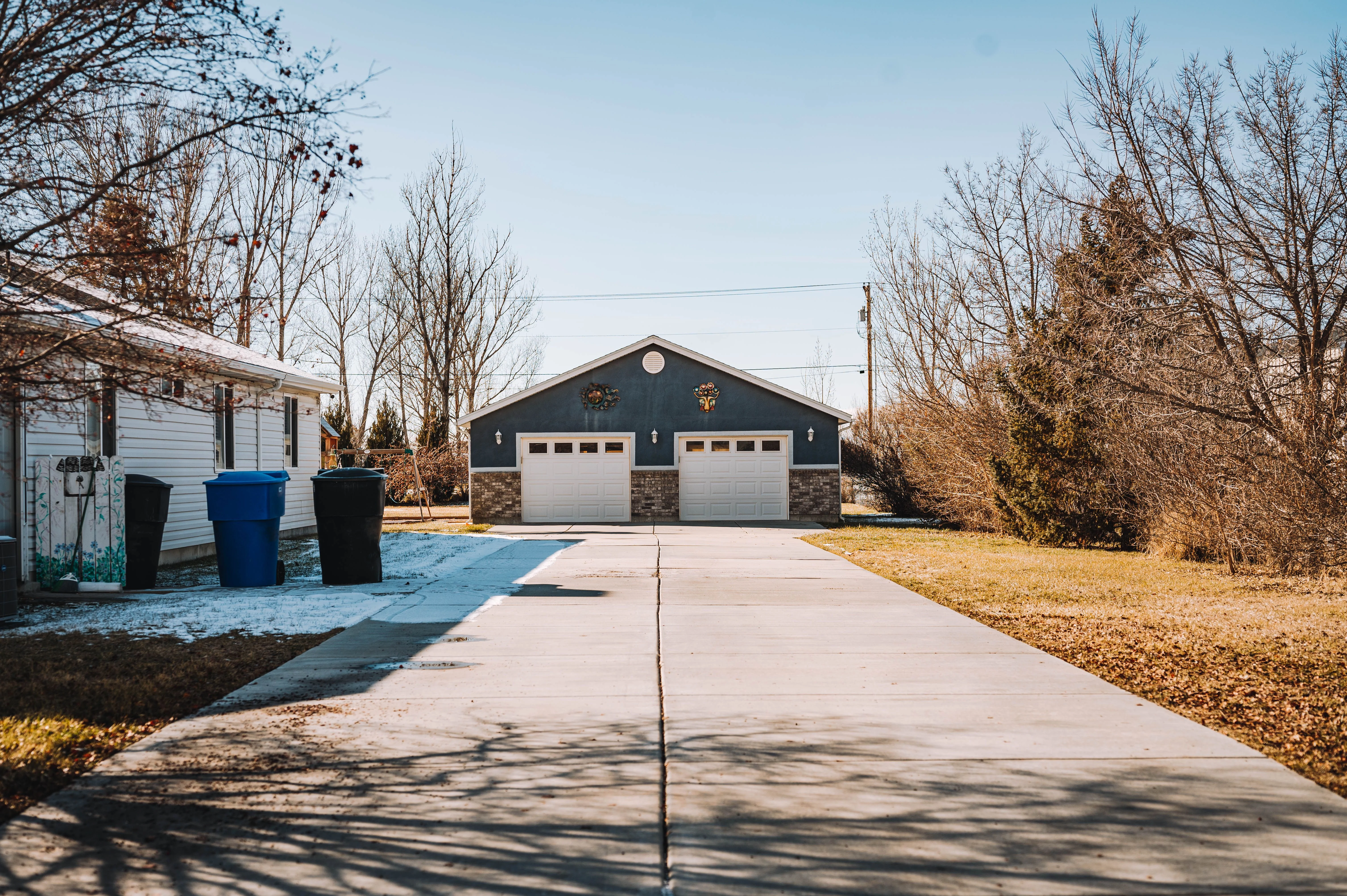
The area
What That Means for Doors
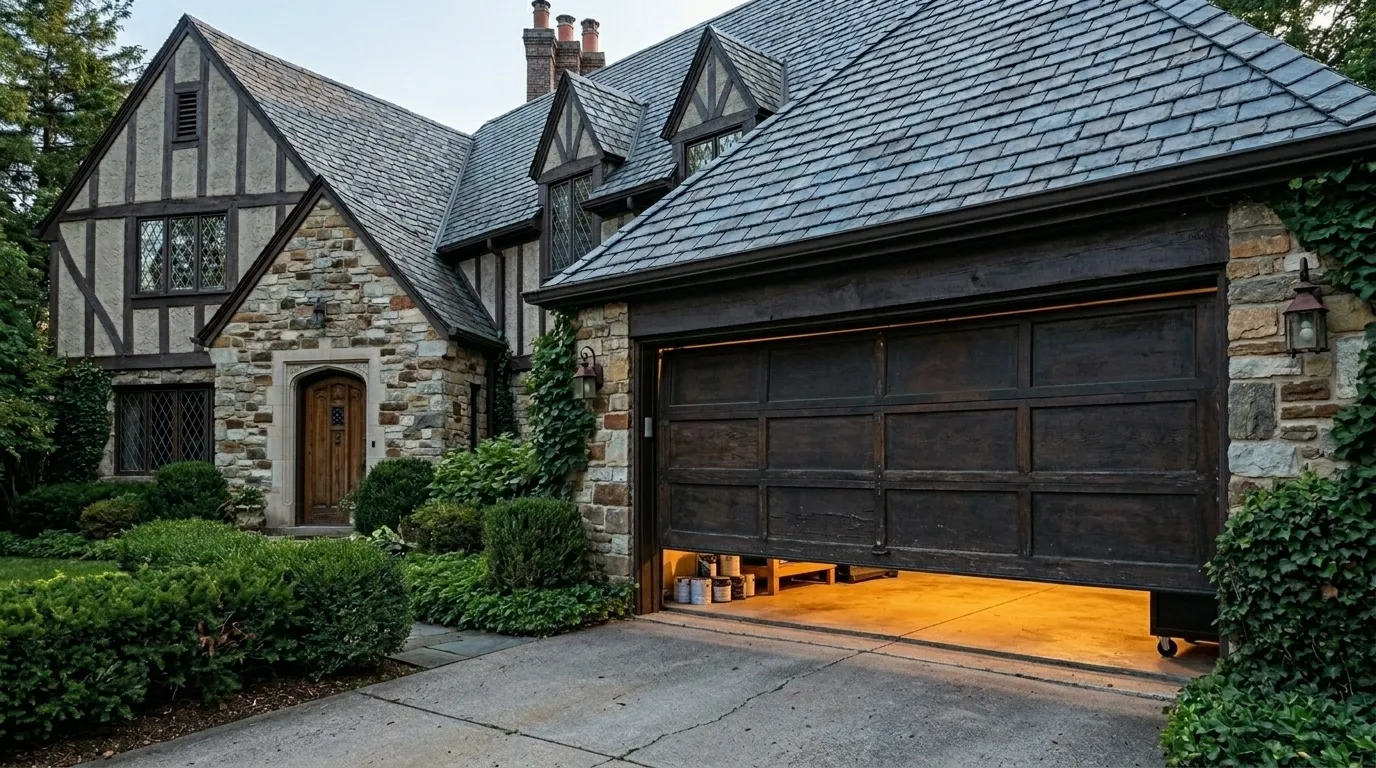
A house built around 1962 was most likely fitted with a single-panel or early sectional door running on extension springs, not the torsion setup you'd find on something built in the 1980s. Extension springs age differently - they stretch, they fatigue at the hook ends, and without a safety cable running through the coil, a snapped spring can send hardware across the garage. That's not a scare tactic, it's just how that generation of hardware fails.
If a door here has been replaced since the original build, the new door may still be riding on an old track width or an old header clearance that doesn't match modern opener brackets. That's the kind of mismatch that causes a brand-new opener to strain against an old frame, wearing the gears faster than it should.
We check for both conditions on the same visit: what's original, and what's been patched in later. Fixing one without accounting for the other usually means a callback. Honest limitation: if the header framing itself needs rebuilding to take a modern door, that's carpentry work outside what we do, and we'll say so rather than force a door onto a frame that isn't ready for it.
What we find
Where We Stop
We run this call from Port Orchard, roughly 15 miles out, and we don't keep a truck or drop box staged in Normandy Park itself. Jobs here get scheduled the same way as anywhere else on our route - we come to you, do the work, and head back. There's no local depot to point to, and we're not going to pretend otherwise.
What that means in practice is that same-area jobs sometimes get grouped on a route with nearby stops rather than run one at a time. We're not going to promise a response window we can't back up with a fact, so we won't put a number here that isn't accurate. If timing matters for your situation, ask when you call and we'll tell you straight what the schedule looks like that week.
How we work
Old Streets and New Ones
Between the original 1962-era builds and the newer homes that have gone up since, this stretch of the coverage area has a real split in door types - original steel sectional with extension springs on one end, and torsion-spring doors from later renovations or infill construction on the other. Neither is wrong, but a tech showing up needs to know which one they're walking into before pulling a spring cable.
Given the median income here runs well above the broader service-area figure, we also see more owners opting to replace rather than patch when a door is nearing 20 years old - insulated steel doors with better R-values are a common upgrade request. That's a reasonable call on an older house where the original door was never insulated to begin with.
We don't have a breakdown of exactly how many homes here have been updated versus original, so we treat every job as an on-site assessment rather than assuming based on the neighborhood's general age. That's slower than guessing, but it's the only accurate way to quote the work.
Service areas
Other areas we cover near Normandy Park
Questions
Common questions
Do you have a shop or truck based in Normandy Park?
No. We run out of Port Orchard, about 15 miles away, and travel to Normandy Park for scheduled jobs. There's no local depot here, so we can't offer a guaranteed same-hour response - we'll give you an honest window when you call.
Why does my older door still use extension springs instead of torsion springs?
Houses built around 1962, which is common in this area, were often fitted with extension springs mounted along the horizontal track rather than a torsion spring over the header. It was standard for that era. If yours doesn't have a safety cable through the spring coil, that's worth having checked.
Is it worth replacing an original 1960s-era door instead of repairing it?
Often yes, especially if the door was never insulated and the track or hinges are original. We see this decision made more often in this area given the household income here, but it depends on the door's condition - we'll look at it before recommending replacement over repair.
Ready when you are
Need a garage door sorted in Port Orchard?
Port Orchard Garage Door Pros repairs and installs garage doors, springs and openers in Port Orchard, WA and the surrounding area.